LNG's "floating pipeline"
This original content in this section featured a ten-part series on
Master Limited Partnerships (MLPs). MLPs are “pass through” entities
involved in the production, distribution or storage of energy. Think of
oil and gas pipelines—they are the perfect example of an asset base
packaged inside an MLP. The series detailed the history of the
structure, the terminology, the risk factors, tax treatment of revenue,
the impact of pipeline crisscrossing the country, etc. That material
has now been archived and is available
HERE.
As the MLP industry evolves, my knowledge base and interest has also evolved. The focus is now on one unique aspect of the natural gas business. Please read the passage below:
Liquefied Natural Gas (LNG) is an alternative method to transport natural gas from producer to seller when physical pipelines can’t be used due to economic or geographical reasons. Methane gas is cooled to a temperature of minus 260 degrees Fahrenheit (about minus 160 C) which converts the gaseous property into an easily transportable liquid. Once frozen, the LNG volume is approximately 600 times less than the equivalent volume of methane gas. Exporters load the liquid gas onto special carriers. At the receiving location, the LNG is offloaded from the ship, reheated (causing the liquid to be “regassed”), and put into a receiving country’s pipeline system for distribution or storage.
The ships built to transport LNG utilize the Moss (a.k.a. “dinosaur egg”) system or the Membrane system. The majority of carriers are the Membrane type. A typical carrier has a capacity of 165,000 cbm (cubic meters) but the storage capacity of the ships has been trending upward. One can think of LNG carriers as “floating Thermoses.”
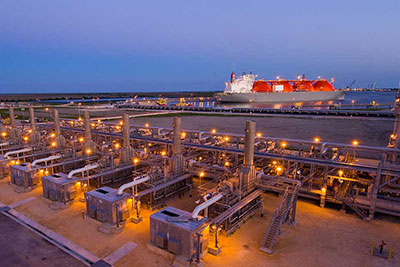
LNG has been part of the world energy market for decades. The largest importers in recent years have been Japan, South Korea, China, India, the United Kingdom and Spain. The largest exporters have been Qatar, Malaysia, Russia, Nigeria and Australia.
As recently as 2005, it was expected that the U.S. would have to be an importer of LNG. Import terminals were built, mainly around the Gulf Coast, with the most widely known built by Cheniere Energy. But once “fracking” and “shale gas” hit the market, more supply than demand was created—along with a decrease in the price of the commodity.
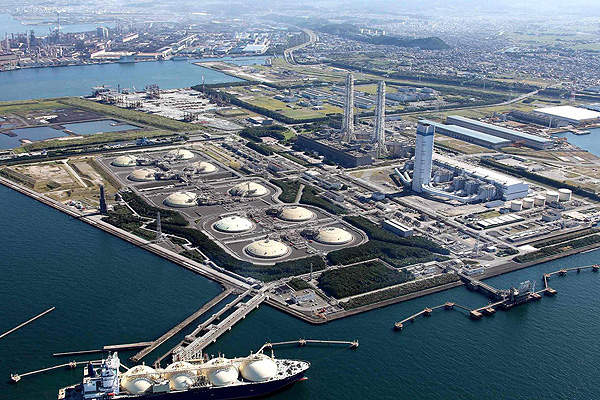
Cheniere Energy applied for—and received permission—from the Department of Energy and the Federal Energy Regulatory Commission to convert their import terminal into an LNG export terminal. Since February of 2016, Cheniere has been sending LNG to South America, Europe and Asia.
More U.S. export terminals will be coming on line as other entities have gone through the DOE and FERC approval process and signed contracts with LNG buyers.
Beyond the U.S. becoming a major exporter of LNG, there are other reasons for investors to look at this segment of the energy industry. Some of these reasons:
Worldwide production of LNG expected to grow from 245 mtpa (million tons per annum) in 2015 to 379 mtpa by 2020
Trade routes for LNG carriers have increased from nine in 1995 to 232 in 2016
There were 34 countries buying LNG in 2015 and 19 exporters. New buyers will be entering the market to take advantage of low natural gas prices and as a way to decrease reliance on coal or pipeline supplies that may have political instability
The expansion of the Panama Canal achieved two purposes for the industry: (1) larger LNG carriers will now be able to navigate the canal (2) travel time from the U.S. to premium LNG markets has decreased (travel time from Cheniere’s terminal in Louisiana to Tokyo Bay has decreased from 34 days to 20 days).
There may be an investment opportunity in entities that own the special carriers that transport LNG. Investments can be made into the exporters and the “midstream” MLPs delivering the natural gas to the terminal. Those entities are involved in energy industry segments beyond LNG and their prices and distributions will be impacted by numerous factors. Our focus is on the entities that own the carriers under long-term charter agreements with strong counterparties
Questions? Comments? Please use the contact information on the home page to contact me to discuss investing in the LNG carrier industry—including an overview of the industry, prices, yields, entry points and risk factors.
Disclosure
The tax and investment information contained herein is general in nature, is provided for informational purposes only and should not be construed as investment, legal, or tax advice, and is not an offer to buy or sell any securities mentioned herein. While investors should be aware that there are risks inherent in all investments, investments in publicly-traded MLPs involve risks and considerations that may differ from investments in common stock; such as tax complexity risk, legislative risk, concentration risk, market risk, interest rate risk, distribution policy risk, liquidity risk, commodity price risk, regulatory risk, and conflicts of interest. Although this information has been gathered from sources believed to be reliable, Trustmont Financial Group cannot guarantee that this information is accurate, complete, or timely. Therefore, the information should be relied upon only when coordinated with individual professional advice. Past performance is not a guarantee of future results.